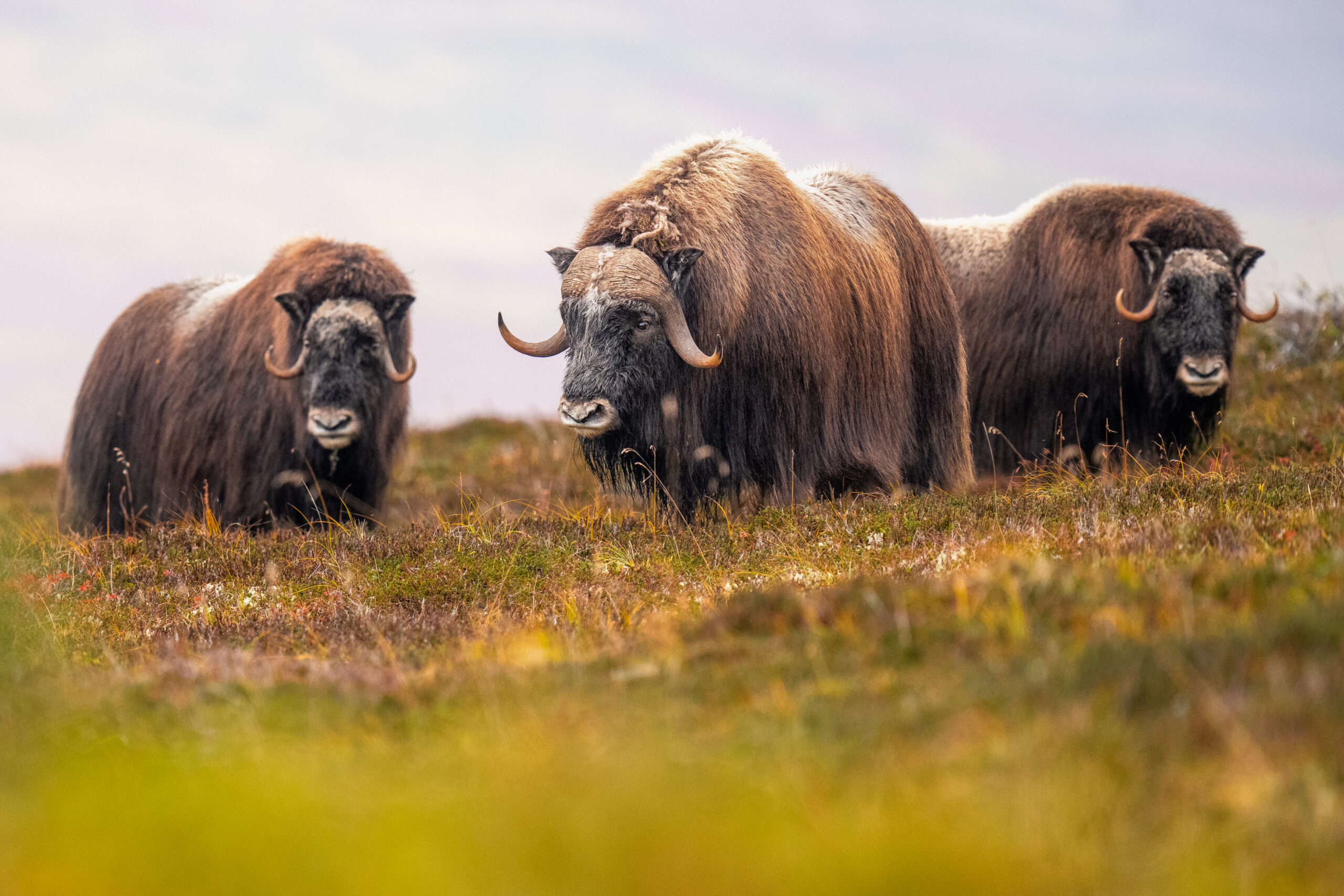
There are landscapes that seem to remember the old world more vividly than the new. The Seward Peninsula, where the Bering Sea breathes cold mist into the hills and the tundra turns to fire each September, is one of them. This is muskox country: wind-shaped, wide-open, and stitched with the migrations of animals that have been here since the Pleistocene.
For five days, we’ll step into that world. Not as spectators keeping our distance from something foreign, but as travelers invited into a place where time slows, sound carries, and the presence of a single muskox can feel like standing in the company of an ancestor.
This workshop is designed for photographers who want more than a checklist image. This is for those who want to feel the landscape under the photograph — the tension of wind against wool, the way the light slides across the tundra, the quiet intelligence of an animal whose lineage survived ice ages and megafaunal extinctions long before any of us were imagined.
Muskox (Ovibos moschatus) are not newcomers to North America. They are survivors of an age when the world was colder, wilder, and shaped by ice. At the close of the last ice age, muskoxen roamed across Europe, Asia, Greenland, and North America, including what is now Alaska.
But by the mid-1800s, muskox disappeared from Europe and Asia, and by the 1920s, they had vanished from Alaska, as well. The only remaining herds survived in remote pockets of east Greenland and Arctic Canada. Global concern sparked at a time when most wildlife losses went uncared about, and conservationists began pulling the species back from the brink.
In 1930, a group of 34 muskoxen were captured in East Greenland and brought to Fairbanks, beginning one of the most successful reintroduction stories in the North. Later, they were moved to Nunivak Island, where the animals not only survived, but flourished in the wind-scoured island in the Bering Sea. By 1968, the herd had grown to about 750 in total.
From that single herd, the restoration of the species began. Muskox from Nunivak were released on the Seward Peninsula, the very landscape this workshop is exploring, as well as Cape Thompson, Nelson Island, the Arctic National Wildlife Refuge, and other areas. By the early 2000s, Alaska supported nearly 4,000 muskox.
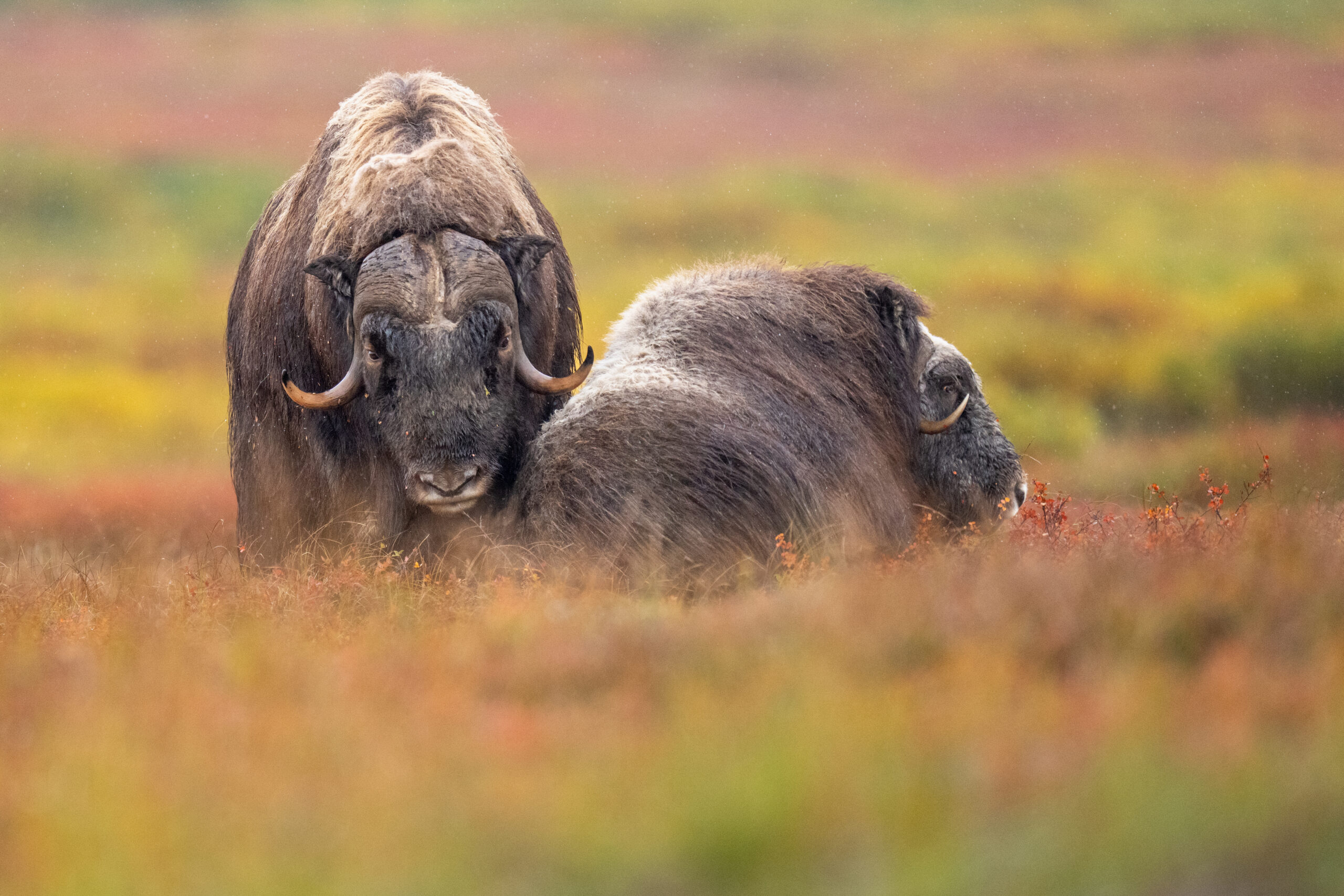
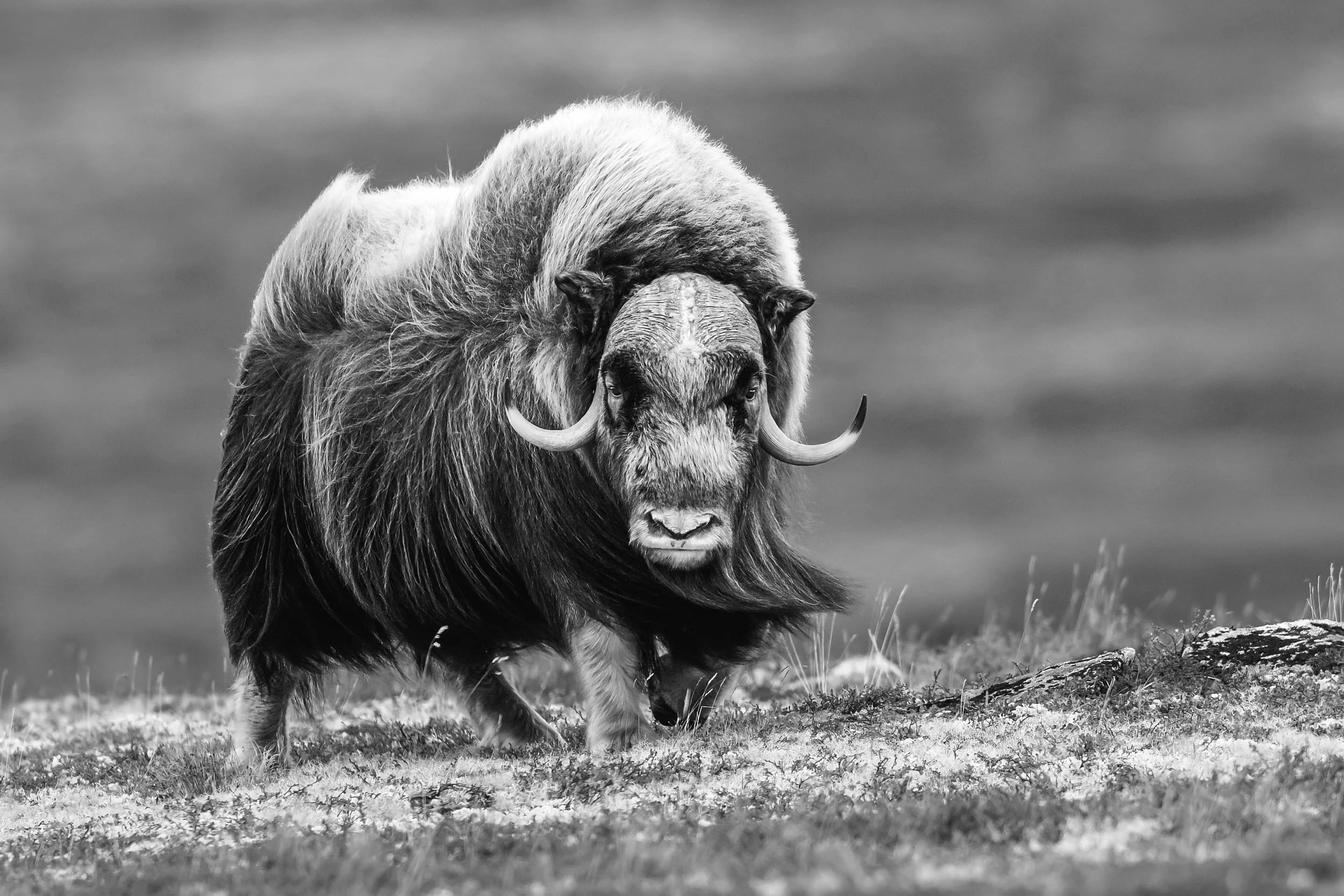
The breeding season for muskox spans late summer into early fall, with mating occurring between August and October. During the height of the rut, dominant males challenge rivals with head-on charges that can be felt as much as heard, the impact reverberating across the tundra like a struck drum. These battles determine which bulls will control small harem groups of five to fifteen females and sub-adults, guarding them fiercely and preventing other adult males from entering.
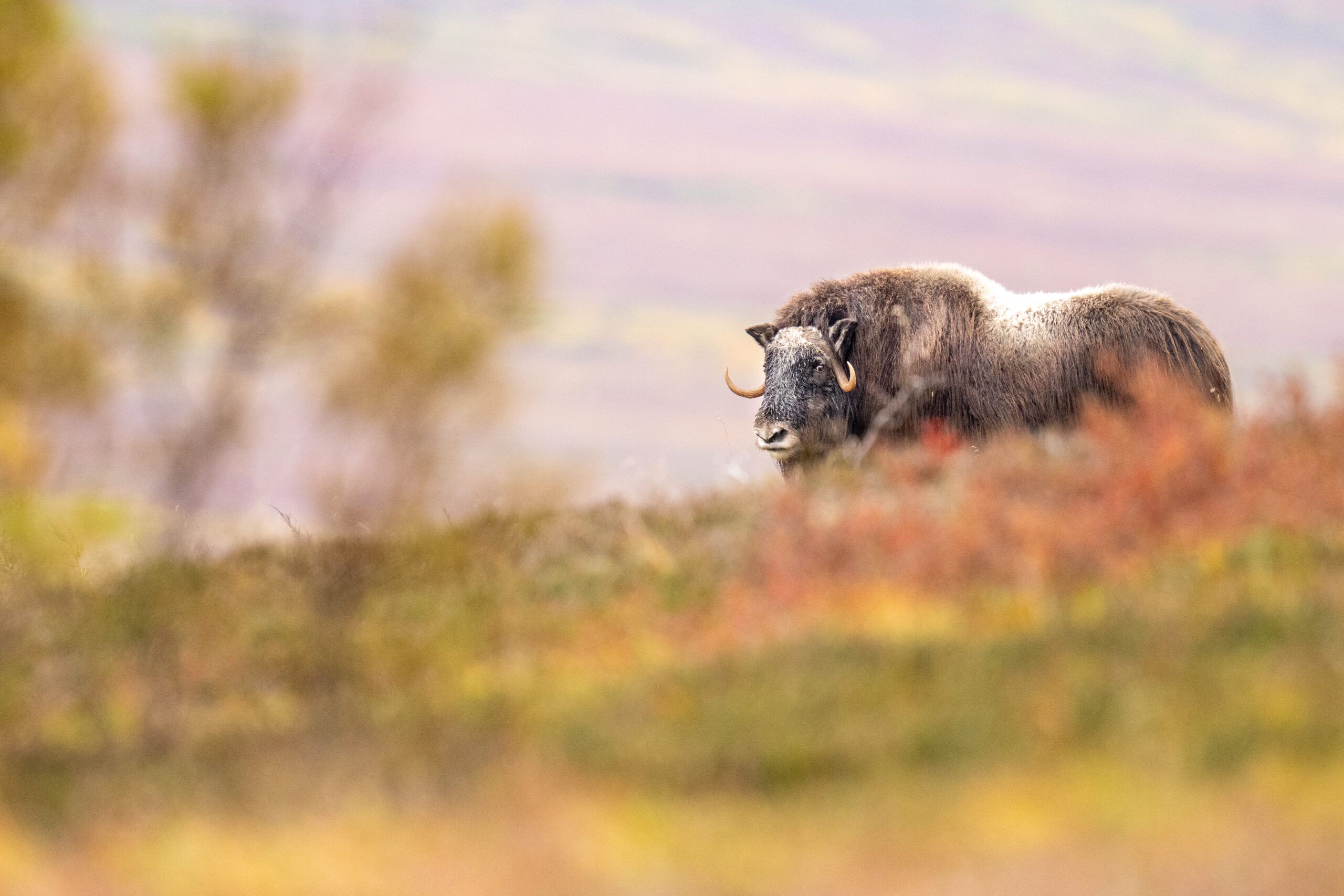
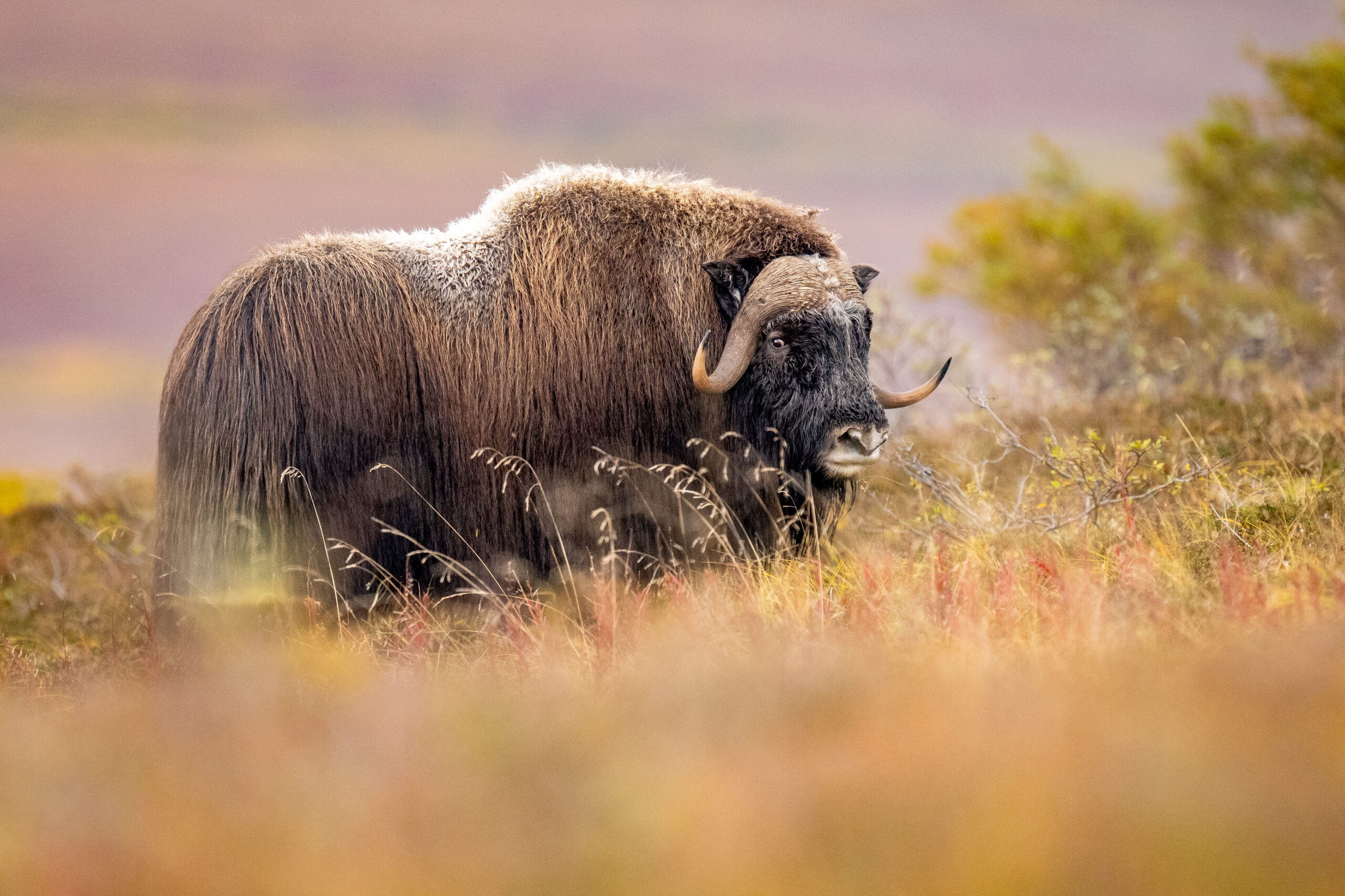
Early September is the sweet spot: fall color spills across the landscape, the light sits lower in the sky, and temperatures remain comfortable enough for long photographic sessions. The bulls are beginning to settle after the rut, the harems are established, and family groups move across open ground in a way that allows for patient, respectful, and intimate photography.
Around Nome, muskox inhabit a mosaic of tundra, rolling hills, river drainages, and berry-rich slopes, and this workshop is timed to take advantage of some of the most beautiful colors to wash over the tundra.
Nome also provides something rare in Alaska: road access to photogenic tundra ecosystems. Over the course of the workshop we will travel the Teller, Kougarok, and Council Roads, each one opening additional habitat, ribbons of gravel leading into country that feels impossibly vast. Along the way, the tundra provides other gifts: red fox, tundra swans, moose, the last of the bear activity during hyperphagia, willow ptarmigan in transitional plumage, and sweeping landscapes that seem made for wide-angle storytelling.
Gallery
Select any photo to see it full size.
Included
- Single-occupancy lodging starting the first night of the workshop
- Ground transportation in Nome
Not included
- Airfare to/from Nome, Alaska
- Meals
- Items of a personal nature (e.g., laundry, souvenirs)
- Travel insurance
- Incidentals incurred at lodging
Payment
$1,500 deposit. The final balance is due 90 days before the start date.
Insurance
General travel insurance is highly recommended, but not required.
Physical difficulty
The tundra of the Seward Peninsula is vast and it isn’t uncommon to put hundreds of miles on our vehicle every day we’re in the field. This is not a national park, it’s a completely wild space and the muskox wander to new locations constantly. While the herds near town tend to be relatively habituated to traffic and people, some of our best opportunities present themselves well outside of Nome. Those herds are far more wary, and we may walk up to half a mile or more at a time on the tundra (uneven, spongy ground) while carrying our own gear.
The weather can also be cold and wet in the fall, with winds shifting and adding to the mix. We may spend an hour or more at a time in these conditions while we work with a herd.
To fully participate in this workshop, we recommend that photographers be comfortable walking as far as two miles on uneven ground while carrying their own gear in inclement weather.
What to expect
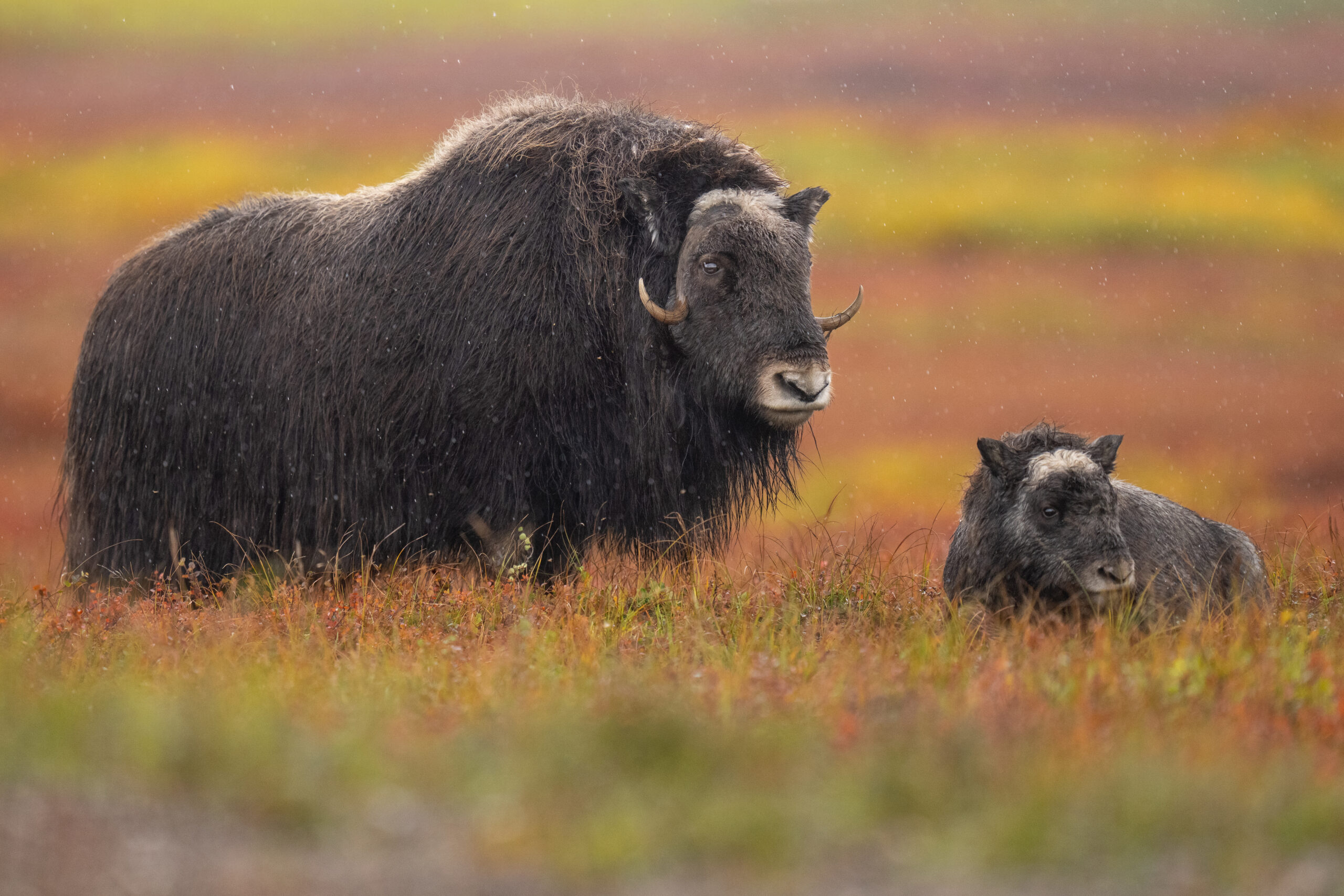
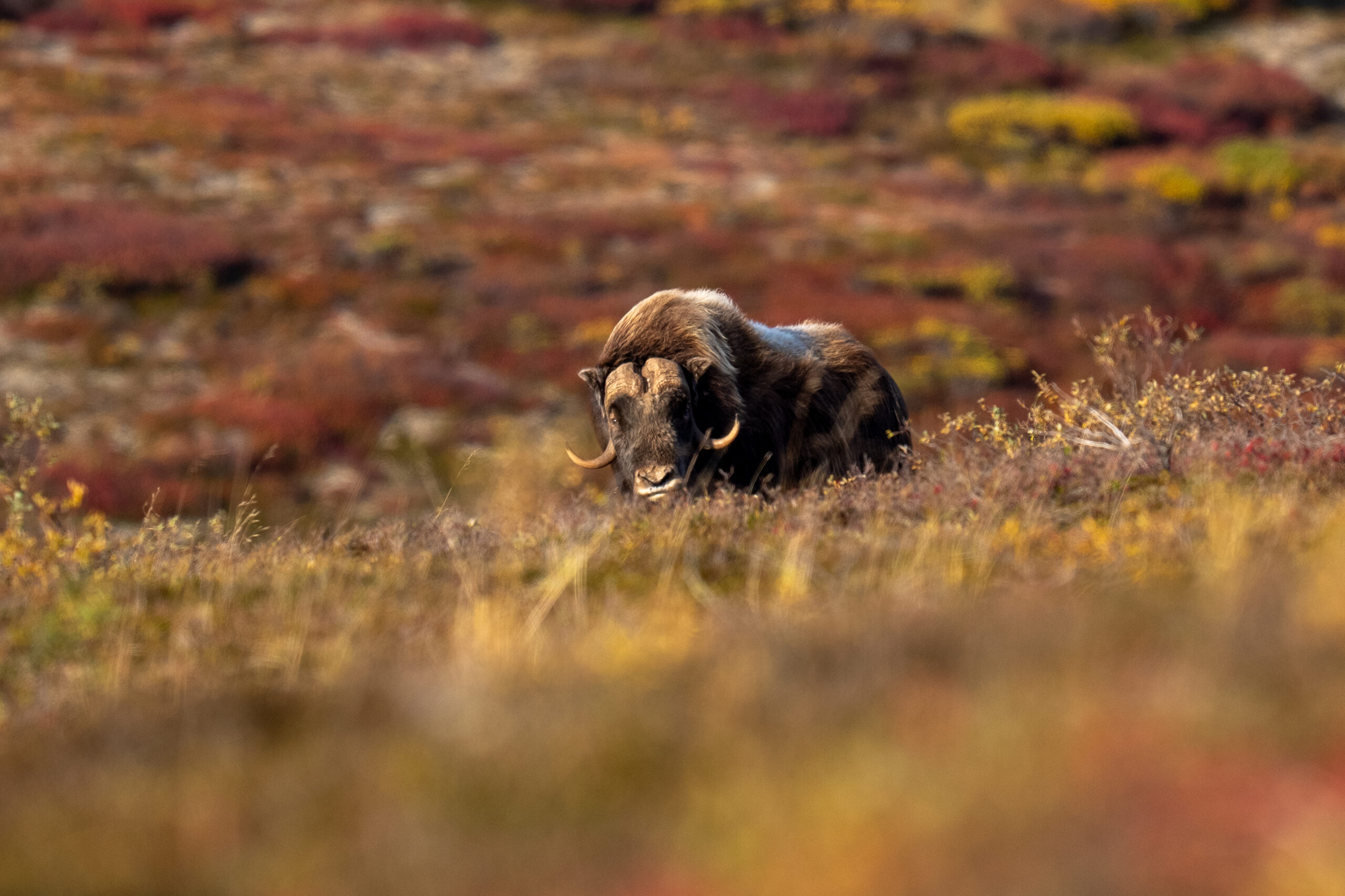
The history of the muskox and their lives here shapes the way we photograph them. When a muskox cow glances back over the shoulder of her calf, or a bull stands broadside against a hillside flushed with autumn color, we’re not just documenting wildlife. We’re seeing the living continuation of a lineage restored to the Alaska landscape by human hands, human foresight, and an acknowledgment of our responsibility to the ancient animals who share our world.
On this workshop, you’ll learn to photograph muskox with that full story in mind: not simply as charismatic subjects, but as survivors of the Pleistocene, reclaimed residents of the tundra, and quiet reminders of what can endure when we choose to protect it.
Questions
How do I register for this workshop?
Once you fill out the form and indicate you’re ready to secure your spot, we’ll send you our registration paperwork along with an invoice for your deposit. When the paperwork is complete and the deposit has been paid, you are officially registered! While you’re waiting for your departure time to arrive, you’ll receive our Titans of the Tundra Workshop Guide, which goes over a more detailed itinerary, gear recommendations, clothing recommendations, and has a packing list.
How much physical activity is involved?
We cover a lot of ground in our vehicle every day during this workshop, but when an opportunity presents itself, we often find ourselves hiking across the tundra, up hills, and into the area where the muskox herds thrive. Photographers should feel comfortable walking a couple of miles at a time over uneven, spongy tundra. In addition, the weather in and around Nome during the fall can be windy, cold, rainy, and change on a dime. This can add to the strenuousness of the workshop, and should be taken into consideration when evaluating whether or not this is the right workshop for you. As always, we’re happy to go into more detail about this with anyone who has concerns about the physicality of this trip.
What kind of clothing should I pack?
As is the saying, “There is no such thing as bad weather, just bad clothing.” A complete guide to packing for comfort and warmth will be provided to photographers on the trip. The key is layers, understanding what each layer does, and how to put it together. While we may “sit” on a photo opportunity for a long while if the situation arises, the majority of the time we will be going in and out of a heated vehicle and we’ll always be within a short walk to our vehicle, too. As such, proper clothing is important and we’ll guide you through it, but few and far between are the times we’ll be braving the elements for too long.
Why do you only take three photographers?
There are some places where a smaller group results in more opportunities for everyone involved and this workshop is one of them. The muskox whose territory is closer to town are habituated to the vehicles and people, but herds that live outside the immediate area are far more wary of humans. Working in a group half the size of my usual workshop means we can be more strategic, get in closer, work with a herd longer, and maximize our experience in the field the way we can’t if I add three more people to the mix. A smaller group also means more personalized attention when and where you need it.
What is your cancellation policy?
We understand that cancelling a long-anticipated trip is disappointing. But we, too, plan far ahead before each departure and continuously send non-refundable payments to hotels, other suppliers, and travel partners. Therefore, we must strictly adhere to the cancellation and refund policy. We strongly suggest that you purchase travel insurance in the event that your travel plans change or you need to cancel your trip. The following are the terms of our cancellation and trip change policy:
Cancellation and refund policy:
Deposits are non-refundable after a 10-day grace period.
If you cancel within the grace period, we will refund your deposit to the original form of payment, minus a $250 administrative fee and any payment processing fees incurred.
After the grace period, no refunds will be issued unless we can fill your spot. If we can fill your spot, we will issue a refund minus a $250 administrative fee and any payment processing fees incurred.
Final payment deadlines:
U.S.-based workshops: Final balance is due 90 days before the start date.
International workshops: Final balance is due 120 days before the start date.
By booking, you acknowledge and accept these terms. If you have any questions, we’re happy to help clarify.